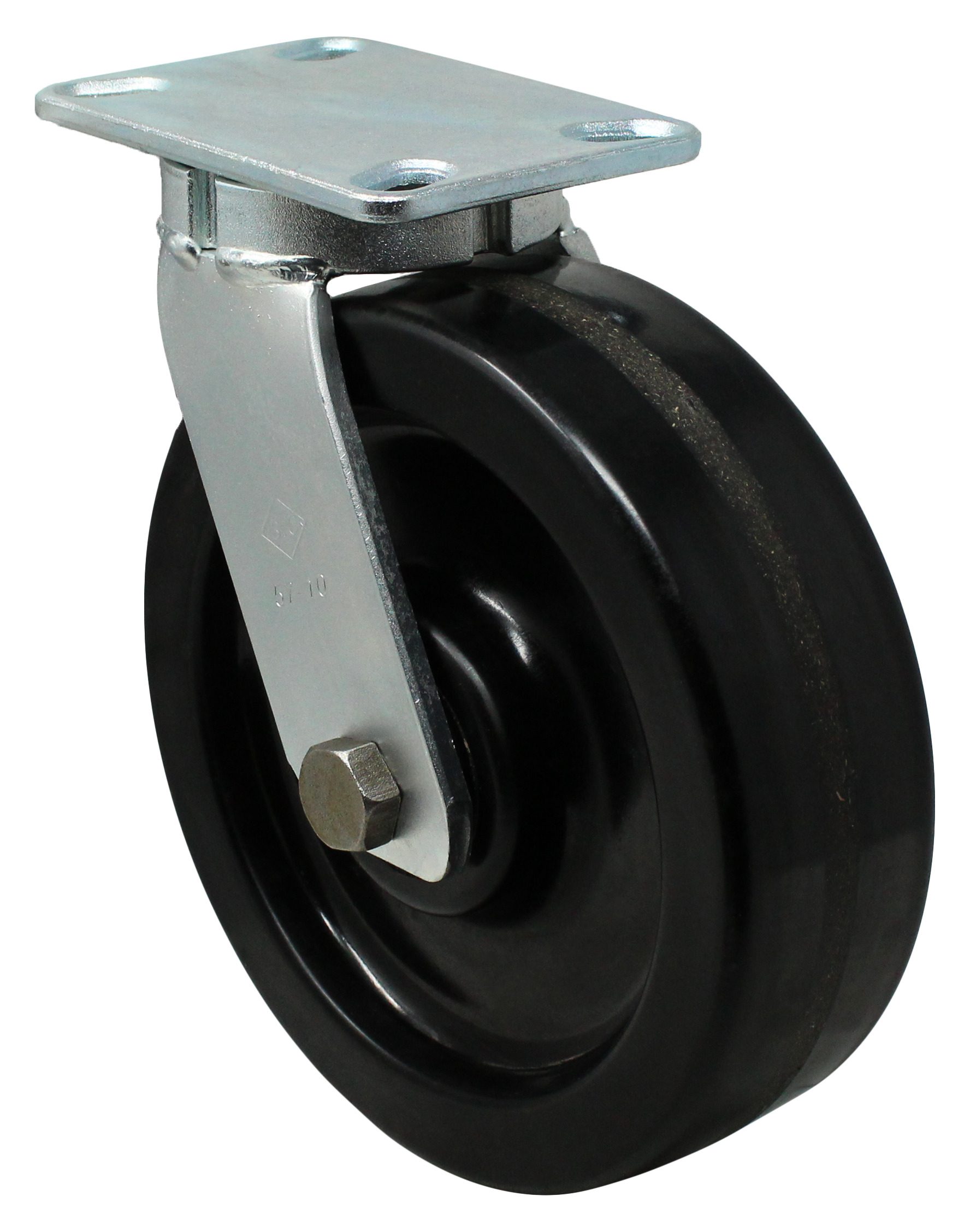
Description Rigid Caster Model 30 is a step up from the rigid casters shown on G15. These Rigid casters have larger wheels, big wheel bearings, a higher weight load capacity rating, and a larger mounting plate than the caster that is shown on G15. It utilizes superior performance on both hand powered and automated equipment. The 30 Model frames are plated in zinc for rust prevention. There are grease fittings for the bearings in the wheel. Rigid plate casters are usually attached to machinery at the opposite end of the push handle and where casters with swivels are attached. This enables the employee pushing the equipment to be able to control the line of travel. It should also be stressed that rigid plate casters have two legs perpendicular to the mount plate, preventing sideways movement. Equipment with two rigid casters and two swivel casters must be handled into position. Capacity up to 7,000 pounds per plate caster. Model 30 features a large swivel and wheel bearing which allows for heavy loads and more arduous service. This caster is also available in 304 Stainless Steel as the SS-30 for wet or corrosive applications. For more details and assistance placing an order, give us a call at 800-501-3808. Polyurethane Caster Wheels from Caster City offer superior performance compared to rubber wheels, excelling in resistance to grease, oil, cutting, chunking, and abrasive wear. These caster wheels come with green (PY) or red (PYR) polyurethane tread chemically bonded to an iron core. The polyurethane caster wheel can be used on almost any factory floor. With a tire hardness of 90—“95 Durometer (Shore A), they provide excellent durability. These polyurethane caster wheels maintain a temperature range of -20°F to 180°F. The primary advantage of polyurethane wheels over rubber is their significantly higher load capacity. Polyurethane caster wheels have a safe operating capacity of up to three times the capacity of the same size rubber wheel. Polyurethane wheels roll more easily than rubber at the same load on smooth floors. However, when used at full capacity, polyurethane is not easy rolling. Capacity ratings serve as a guideline for safe operation, but actual performance depends on usage, service conditions, and environmental factors. The bonding agent securing the polyurethane tread to the iron center may be affected by certain chemicals, high impact, overloading, or heat buildup. Available with plain bore, precision sealed ball bearings, roller bearings, or. Ideal for press and stamping equipment, food processing plants, pharmaceutical manufacturing, and printing facilities.